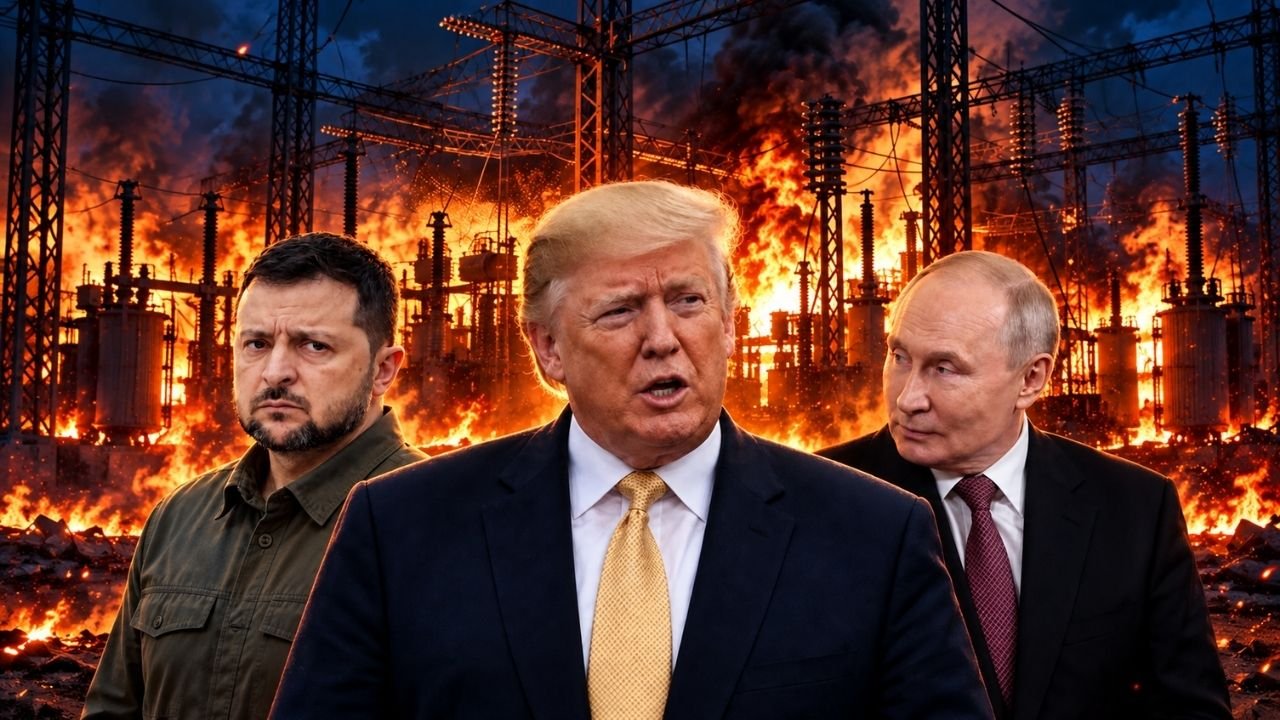
US President Donald Trump claimed that Ukraine and Russia had agreed to stop targeting each other’s energy facilities. Volodymyr Zelensky subsequently confirmed that Washington had put forward a proposal for a mutual halt to strikes on critical infrastructure, but stressed that Kyiv expected concrete details and lasting commitments from Moscow.
On September 14, Trump announced on his social media platform that Kyiv and Moscow had purportedly reached an agreement. He also again attributed rising global diesel prices primarily to the Russia–Ukraine war rather than developments involving Iran.
A day earlier, the US president said he had asked Zelensky to halt attacks on Russian diesel production facilities. He said Ukraine must “stop destroying diesel fuel in Russia.”
The Kremlin welcomed the appeal. Vladimir Putin’s spokesman, Dmitry Peskov, said Moscow supported Trump’s call for Kyiv to stop targeting energy infrastructure. However, when asked whether Russia was prepared to reciprocate, he did not announce any corresponding commitment from Moscow.
In his latest statement, Zelensky described the US initiative as a “strong proposal” and said Ukraine was prepared to support it as a first step toward de-escalation.
“There is now a strong proposal from the United States for a mutual halt to strikes on critical infrastructure. And if this can become a first step toward de-escalation — ending Russian strikes on our critical infrastructure and our retaliatory strikes — Ukraine is ready to support de-escalation,” he said.
Zelensky argued that Ukraine’s strikes on Russia’s war economy were putting Moscow under pressure, but said there was still no sign of a genuine Russian willingness to end the war.
“If our American partners can secure Russia’s genuine readiness to stop this war aimed at destroying life, and make that commitment real and lasting, Ukraine will take its own steps toward de-escalation,” he said.
The Ukrainian president stressed that any agreement must cover energy facilities, food supply routes and other critical infrastructure. He also emphasized that the arrangement must be durable.
“We need a strong, just solution — one that lasts, rather than one timed to ‘elections.’ We expect specifics from our partners,” Zelensky said.
Earlier that evening, he had noted that Russian forces attack Ukrainian energy facilities, ports, logistics infrastructure, and warehouses storing food and pharmaceuticals every day. He called on partners to secure reliable, long-term guarantees that Moscow would halt those attacks.
Meanwhile, the Financial Times, citing sources directly involved in the talks, reported that no final agreement to halt strikes on energy infrastructure had been reached. The newspaper’s chief Ukraine correspondent, Christopher Miller, said Trump had gotten ahead of events and that his announcement caught Ukrainian officials off guard, as credible guarantees from Russia had yet to be secured.
According to the FT, Ukraine, Russia and the United States had discussed a mutual halt to strikes during negotiations and subsequent private contacts. For months, Kyiv had proposed extending a possible agreement to ports and other critical infrastructure, but Moscow had previously opposed the initiative.
Sources familiar with the Kremlin’s position told the newspaper they believed Putin might have little interest in reaching such a deal before winter, hoping to increase pressure on Ukraine by attacking its energy system. This is the assessment of the newspaper’s sources, rather than Moscow’s officially stated position.