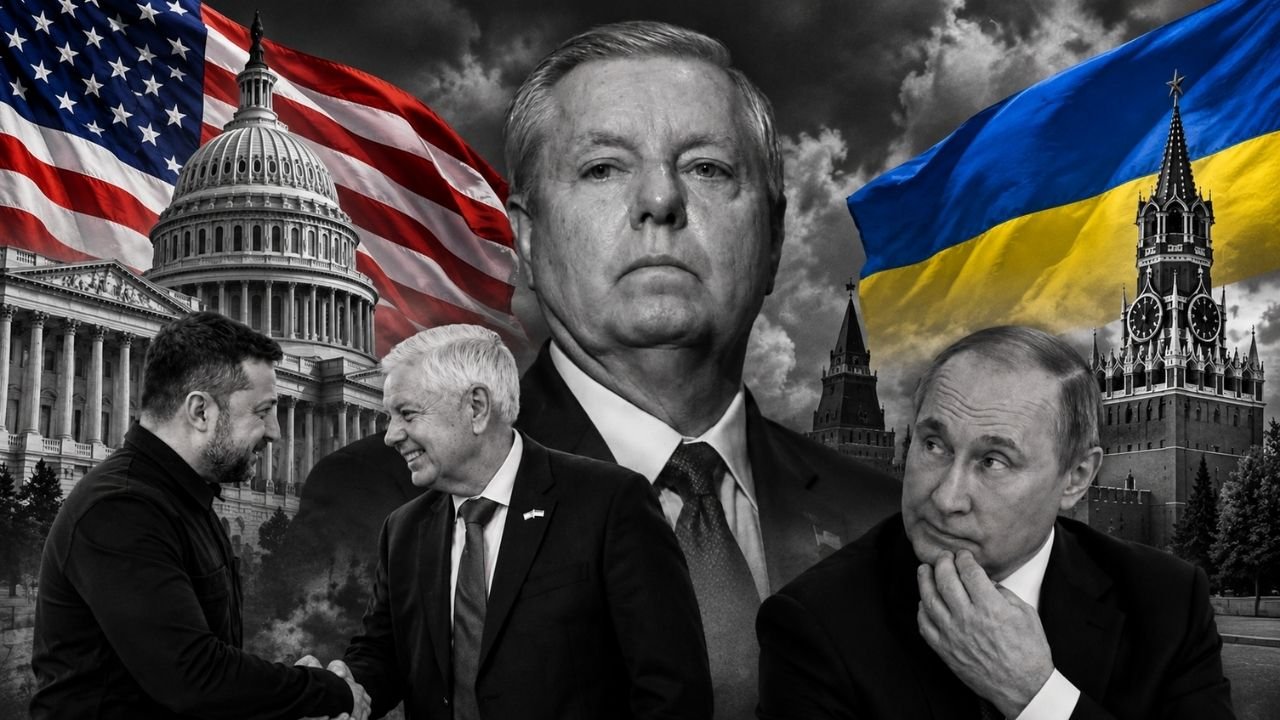
The Graham law signed by U.S. President Donald Trump creates new opportunities to increase economic pressure on Russia, but the effectiveness of the mechanism will depend on how actively the White House chooses to use it. Andriy Dobriansky, an expert at the U.S.-Ukraine Relations Center, expressed this view in an interview with Ukrainian Information Service.
Dobriansky said one of the law’s key features is that it codifies some of the existing sanctions against Russia. This makes them more difficult for a president to lift unilaterally, as doing so would require cooperation with Congress.
According to the expert, the United States used a similar approach during Trump’s first term, when Congress codified restrictions that had previously been imposed through executive action, making it more difficult for the president to revoke them on his own.
At the same time, the law gives Trump broad powers to exert additional pressure on countries that continue to purchase Russian energy. In particular, it allows for tariffs of up to 100% on major buyers of Russian oil and gas. China and India are among the countries that could potentially face such measures.
Dobriansky believes that targeting Moscow’s partners could become an important part of the strategy. In his view, Washington could use economic leverage to push these countries to increase pressure on Russia and encourage negotiations.
However, the expert doubts that Trump will rush to use the toughest measures before the U.S. elections on November 3. He cited the sensitivity of U.S. domestic politics to oil and fuel prices as a key reason.
Dobriansky also pointed to Trump’s phone call with Ukrainian President Volodymyr Zelensky. In his view, Washington’s calls for Ukraine to refrain from striking Russian oil refineries highlight an imbalance in U.S. influence: the United States can pressure Kyiv, while there has so far been no comparable result in stopping Russian attacks on Ukraine.
The expert also links Trump’s position to domestic political considerations in the United States. Rising energy prices ahead of the elections could create additional risks for his administration, meaning the issue of Russian oil extends far beyond the Russia-Ukraine war.
Dobriansky considers making existing sanctions more difficult to lift one of the most important elements of the law. In addition, the legislation limits opportunities for major economic deals between the United States and Russia and provides for additional restrictions against third countries that help Moscow circumvent sanctions.
Trump signed the law on September 18. It expands sanctions against Russian officials, financial institutions, the energy sector and the “shadow fleet,” while giving the U.S. president significant authority to impose tariffs on major buyers of Russian energy. At the same time, the legislation allows the president to use exemptions provided for under the law and waive certain restrictions under specified conditions.