Three days of voting in Russia’s State Duma elections began on September 18. The first day was already marked by unusually high activity in the remote electronic voting system (DEG), reports of public-sector employees being pressured to vote, problems faced by election observers, and alleged irregularities at polling stations.
According to official data from Russia’s Central Election Commission (CEC), overall turnout stood at 22.81% as of 6:27 p.m. Moscow time. Voting will continue through September 20.
One of the main features of the first day was the high level of activity in the electronic voting system. According to Russia’s Ministry of Digital Development, by around noon more than two million of roughly four million registered participants had already voted through the federal system — about half of the total.
The situation in Moscow was even more unusual. According to Meduza, by noon the number of votes cast online was approximately 100 times higher than at the same stage of the 2021 State Duma elections. At the same time, official turnout at conventional polling stations in Moscow was recorded at zero as of noon. The heavy load on the DEG system led to virtual queues, which the Moscow City Election Commission attributed to attacks on the system.
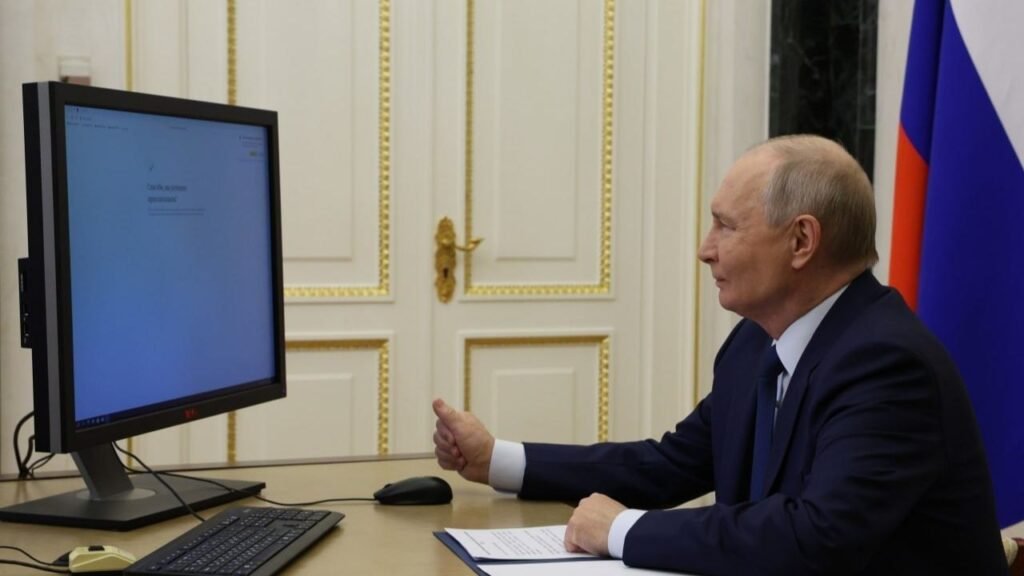
The speed at which the first electronic votes appeared was also notable. In the Moscow region, the first voter reportedly cast a ballot just 38 seconds after the system opened; in the Novosibirsk region, it took 41 seconds, and in Chuvashia, 45 seconds. Vladimir Putin also voted remotely.
Alongside the high online turnout, reports emerged from several regions about possible pressure on public-sector employees to participate in the elections. SOTAvision, citing its readers, reported the use of individual QR codes allegedly intended to track employees’ participation in voting.
In the Yaroslavl region, readers reported that such “public-sector employee codes” were scanned at a polling station. In the Sverdlovsk region, employees at several enterprises said they had been forced to register for electronic voting and report whether they had voted. Similar reports came from Nizhny Tagil and Kemerovo. These accounts, however, come from readers and activists, and each individual case cannot currently be independently verified.
Meduza also reported that teachers in Yakutsk were allegedly required to report not only on their own participation in the elections but also on turnout among students’ parents. Homeroom teachers were reportedly expected to regularly provide information on which parents had already voted. The Altai branch of the Communist Party (KPRF) alleged coercion to participate in electronic voting and threatened not to recognize the DEG results.
Election observers became another major issue on the first day. According to calculations by the outlet 7×7, cited by SOTAvision, nearly 1,300 observers from the Communist Party and Yabloko were unable to begin working at polling stations across several regions. The reported cases included 481 Communist Party observers in the Voronezh region, 279 in the Leningrad region, and 250 Yabloko observers in St. Petersburg.
Russia’s CEC, meanwhile, says more than 380,000 observers are working during the elections nationwide. According to commission chair Ella Pamfilova, political parties deployed more than 209,000 of them.
Even before voting began, several Yabloko representatives serving on election commissions in St. Petersburg received military summonses through the Gosuslugi state services portal ordering them to report to military enlistment offices at 9 a.m. on September 18 — precisely when polling stations opened. According to SOTAvision, two observers working for Yabloko candidate Sergei Mitrokhin in Moscow also received summonses during the first day of voting.
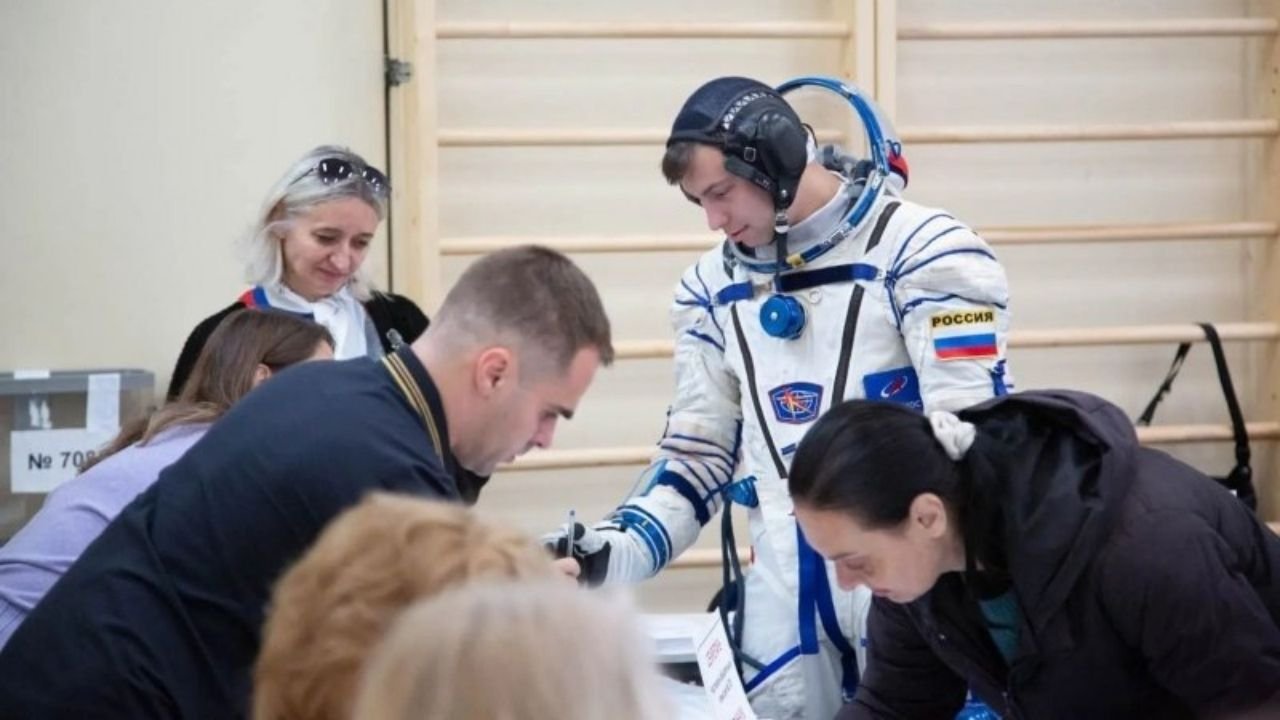
There was also some unusual “creativity” at polling stations. Some Russians arrived to vote wearing costumes ranging from Spider-Man to an astronaut, while one family turned up dressed as bees.

There were also reports of possible election fraud. At one polling station in Voronezh, activists filmed a man who, according to them, placed several ballots into a ballot box at once while holding several passports. In Krasnodar, a Communist Party election commission member called the police over discrepancies in turnout figures: according to his count, 250 people had voted by 3 p.m., while the commission chair reported 448 votes.
In Syktyvkar, SOTAvision reported that 48 ballots already marked for United Russia were discovered at polling station No. 62. Communist Party State Duma deputy Oleg Mikhailov reported the discovery.
Several unusual reports also emerged from Yekaterinburg. According to eyewitnesses, United Russia campaigners near one polling station allegedly handed out food, explained how to vote, and offered payment after voters sent them a photograph of their ballot. At another polling station, hundreds of workers from three Ural factories formed a queue. The local territorial election commission rejected suggestions that the workers had been transported there in an organized manner.
Other unusual incidents were reported elsewhere. In Ufa, observers said they were offered alcohol, while one observer was told that he had allegedly submitted an application to sign a contract with the Russian Defense Ministry. In Samara, the tires of a campaign vehicle belonging to Communist Party candidate Dmitry Aseev were slashed. In Buryatia, polling stations handed out coupons for a prize-draw quiz whose design a Communist Party representative said resembled United Russia’s branding.
Russian media also separately drew attention to voting in Russian-occupied territories of Ukraine. According to figures released by the Russian side, turnout in the occupied part of the Donetsk region had allegedly reached 75% even before the main voting period — more than one million voters. Meduza questioned the credibility of those figures.
The first of the three voting days was therefore marked by a sharp shift toward electronic voting and numerous reports of possible irregularities. Final results of the State Duma elections are expected after voting ends on September 20.