

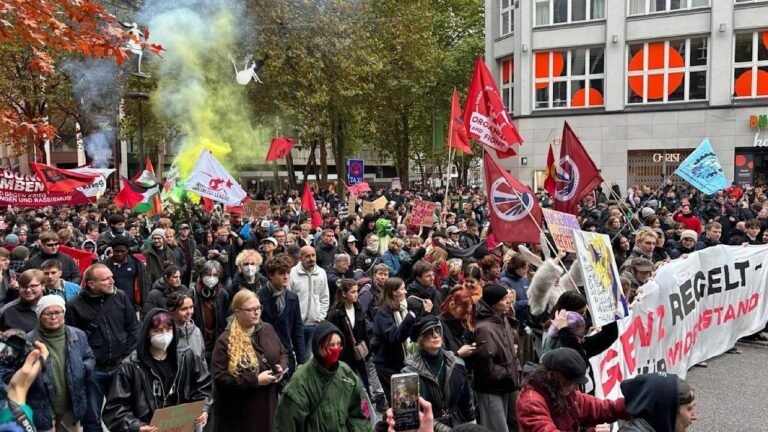
Political tensions have escalated in Poland following a dispute over the leadership of the Constitutional Tribunal, the country’s highest constitutional court. Opposition supporters, mainly from the Law and Justice (PiS) party, gathered outside the court’s headquarters in Warsaw, accusing Prime Minister Donald Tusk’s government of attempting to take control of the judiciary, according to “Reuters”.
The confrontation began with a dispute over who should lead the Constitutional Tribunal.
On October 30, Judge Anna Korwin-Piotrowska suspended Tribunal President Bogdan Święczkowski and his deputy Bartłomiej Sochański from their leadership duties for one month. She assumed control of the institution, arguing that the move was necessary to restore its operations. However, the previous leadership rejected the decision, alleging an unlawful takeover of the court’s official website and accusing its opponents of attempting a coup.
At the same time, Justice Minister and Prosecutor General Waldemar Żurek submitted five requests to lift judicial immunity. Four concerned Święczkowski, while the fifth targeted Sochański. The move was linked to allegations that the officials had obstructed judges appointed by the current parliamentary majority.
Police increased security around the Constitutional Tribunal as protests intensified. Three people were detained after climbing over the institution’s fence. Authorities also reported incidents involving objects thrown at police officers, while denying claims that officers had stormed the building.
Opposition leader Jarosław Kaczyński accused the government of attacking Poland’s constitutional order. The crisis prompted President Karol Nawrocki to turn his aircraft around while travelling to Senegal and return to Warsaw.
Prime Minister Donald Tusk, meanwhile, defended his government’s actions as part of efforts to restore the rule of law following years of PiS rule.
Why Poland’s Constitutional Tribunal is at the center of the dispute
The conflict over Poland’s Constitutional Tribunal dates back more than a decade. After coming to power in 2015, the Law and Justice party introduced judicial reforms that drew criticism from the European Union over concerns about judicial independence.
When Donald Tusk returned to power in 2023, his government began efforts to reverse those changes, arguing that the previous administration had undermined the independence of key judicial institutions.
PiS politicians, however, maintain that Tusk’s government is using judicial reform as a justification to bring the courts under its own political control.
The situation became more complicated after President Karol Nawrocki refused to swear in some newly elected judges. Święczkowski also prevented judges chosen by the current parliamentary majority from taking up their duties at the Tribunal.
The latest confrontation reflects a broader struggle over judicial independence and the balance of power between Poland’s government, president and parliament.

Leave a comment