
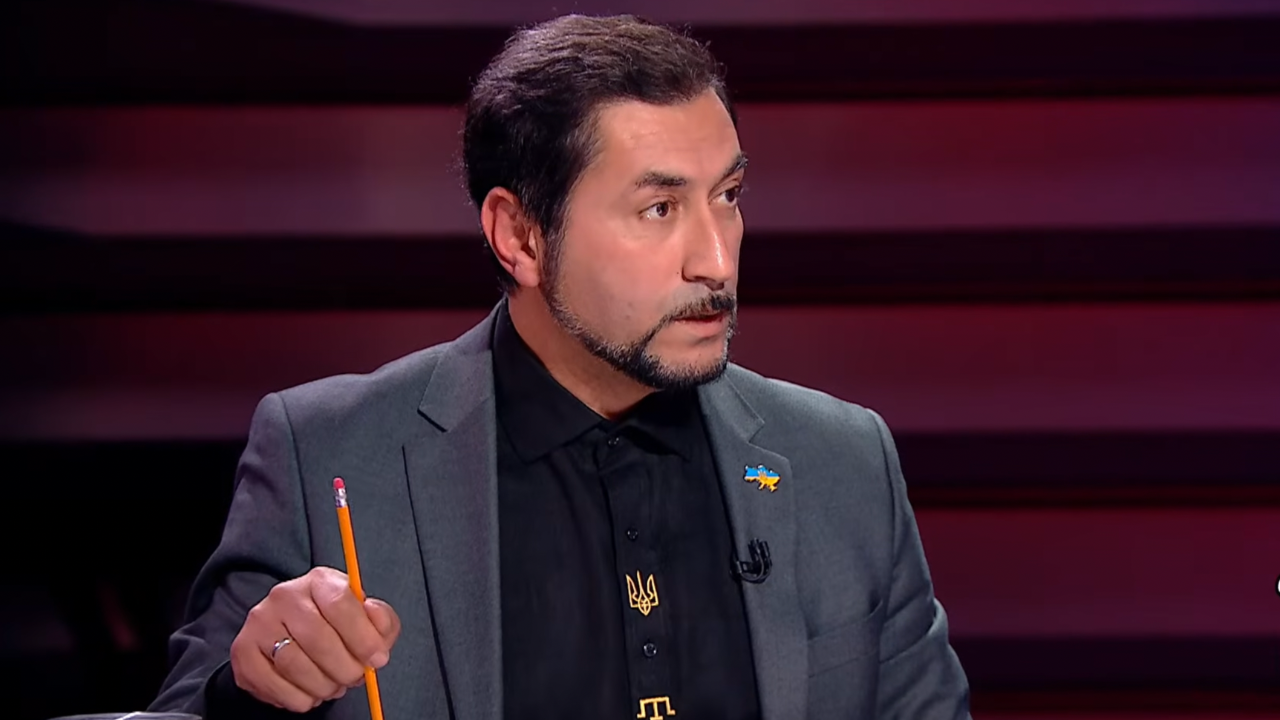
Ukrainian President Volodymyr Zelensky has made significant political mistakes by centralizing power in his office, surrounding himself with loyal associates and sidelining experienced officials, according to Mohammad Farajallah, editor-in-chief of Ukraine in Arabic.
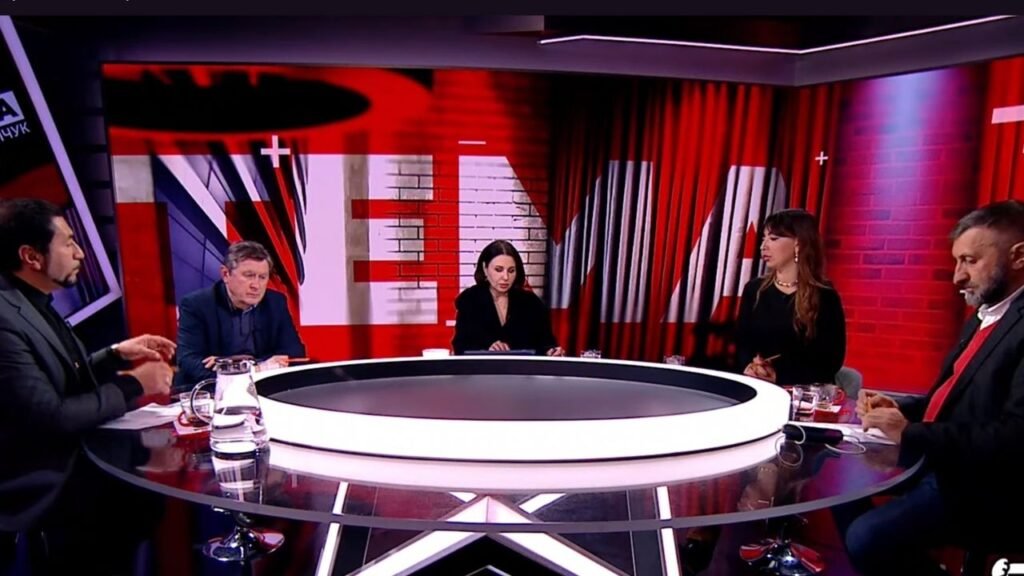
Farajallah made the remarks on November 5 during a broadcast on the YouTube channel of Ukrainian journalist Natalia Moseichuk, discussing political accountability, corruption investigations and the future of Ukraine’s leadership.
Concentration of power in the presidential office
Farajallah argued that one of Zelensky’s most consequential mistakes was allowing an excessive concentration of authority within the Office of the President, potentially weakening the independence of other state institutions.
Ukraine’s political system formally separates power among the executive, legislative and judicial branches. However, Farajallah suggested that this balance has been undermined during Zelensky’s presidency.
“Zelensky brought everyone he knew close to him. Some were professionals, others were not. Naturally, all their mistakes are now attributed to him,” Farajallah said.
According to the editor-in-chief, the president frequently prioritized personal loyalty over professional qualifications, distancing himself from experienced officials who had served under previous administrations.
He argued that this approach created an environment in which some presidential advisers were more inclined to praise Zelensky than challenge his decisions.
Anti-corruption agencies and political pressure
Farajallah also criticized the Ukrainian leadership’s attempt to curb the independence of the country’s two key anti-corruption institutions: the National Anti-Corruption Bureau of Ukraine (NABU) and the Specialized Anti-Corruption Prosecutor’s Office (SAPO).
These institutions play a central role in investigating and prosecuting high-level corruption and have been important to Ukraine’s efforts to strengthen the rule of law and advance its European integration ambitions.
“It was a major mistake — the attempt to eliminate NABU and SAPO. After that, they clearly set their sights on the president and began moving closer and closer to him,” Farajallah claimed.
His suggestion that anti-corruption investigators were deliberately targeting Zelensky represents his personal interpretation rather than an established finding.
Farajallah also acknowledged that he did not know whether Zelensky was personally involved in corruption allegations circulating in Ukrainian political discussions.
“I don’t yet know whether he is involved in what they are trying to attach to him, or whether he simply misjudged the people around him,” he said.
The editor-in-chief argued that the president’s personnel decisions had contributed to the political difficulties now surrounding his administration.
A new political elite emerging from the military
Beyond his criticism of the president, Farajallah argued that Russia’s full-scale invasion has fundamentally transformed Ukrainian society and created a new generation of potential political leaders.
He suggested that military personnel and veterans are increasingly becoming an influential part of Ukraine’s emerging political elite.
“We have a new elite, particularly among the military,” he said.
In his view, money and traditional political networks no longer carry the same influence they once did, while public expectations of political leadership have changed significantly.
Farajallah also criticized some members of Ukraine’s parliament for what he described as a limited understanding of their responsibilities, arguing that attending parliamentary votes alone does not fulfill their obligations to the country.
“Ukraine has changed, but we need to see a new Ukraine in order to preserve Ukraine,” he said.
A political transition and Zelensky’s future
Farajallah suggested that Ukraine needs a gradual transformation of its political leadership to prevent deeper tensions between the government and society.
Support the authors
of Ukraine Brief
→
“This would be a safe way out for Zelensky,” he said, repeating the statement for emphasis.
He argued that political opposition groups currently continue to view elections as the legitimate mechanism for changing the government, but warned against allowing political tensions to escalate.
During the discussion, Moseichuk challenged the idea of transferring power outside established constitutional procedures, noting that such an approach would be unconstitutional.
Farajallah clarified that he was not necessarily proposing the transfer of presidential authority. Instead, he advocated bringing experienced professionals back into government, including officials he believes were excluded because they were not personally loyal to Zelensky.
He also suggested that Ukraine’s political leadership must recognize how profoundly the country has changed during the war, particularly the growing role of military personnel in public life.

Leave a comment