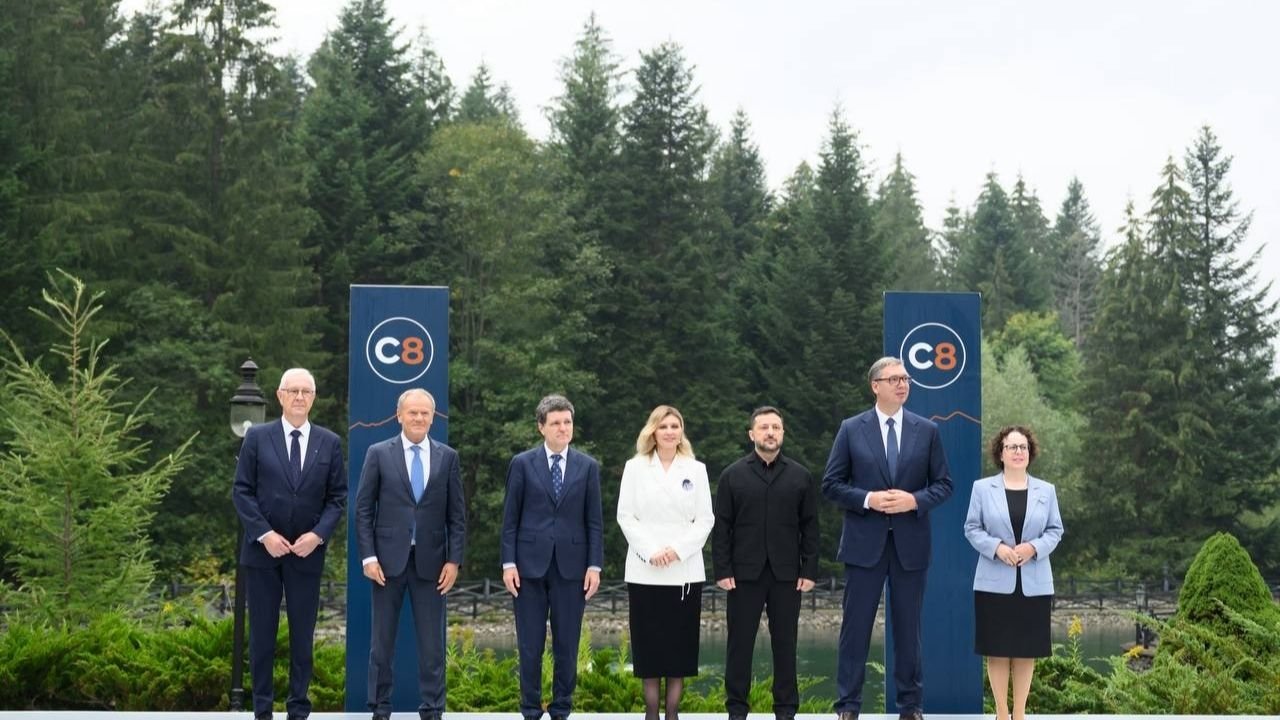
The first summit of the new regional C8 format, the “Carpathian Eight,” began in Ukraine on September 18. The initiative is intended to bring together countries of the Carpathian region around security, energy, transport infrastructure, investment, and cross-border cooperation.
The summit is taking place in Bukovel, Ivano-Frankivsk region. The new format includes Ukraine, Romania, Serbia, Poland, Slovakia, the Czech Republic, Austria, and Hungary. European Union institutions are also expected to be involved in the cooperation.
“Today, for the first time here in Ukraine, in our part of the Carpathians, we are holding a summit that brings together all the Carpathian states, regions, and communities of our countries. We are launching a new format, the C8 — the Carpathian Eight — which brings together us and our neighbors in Europe,” President Volodymyr Zelensky said.
According to him, one of the C8’s objectives is to establish a new mechanism for cooperation within Europe.
“This is a serious start to a movement that should bring our countries even closer together and create another strong element of cooperation at the EU level — security, energy, a significant expansion of logistics and cross-border economic cooperation, and substantial support for our communities,” Zelensky said.
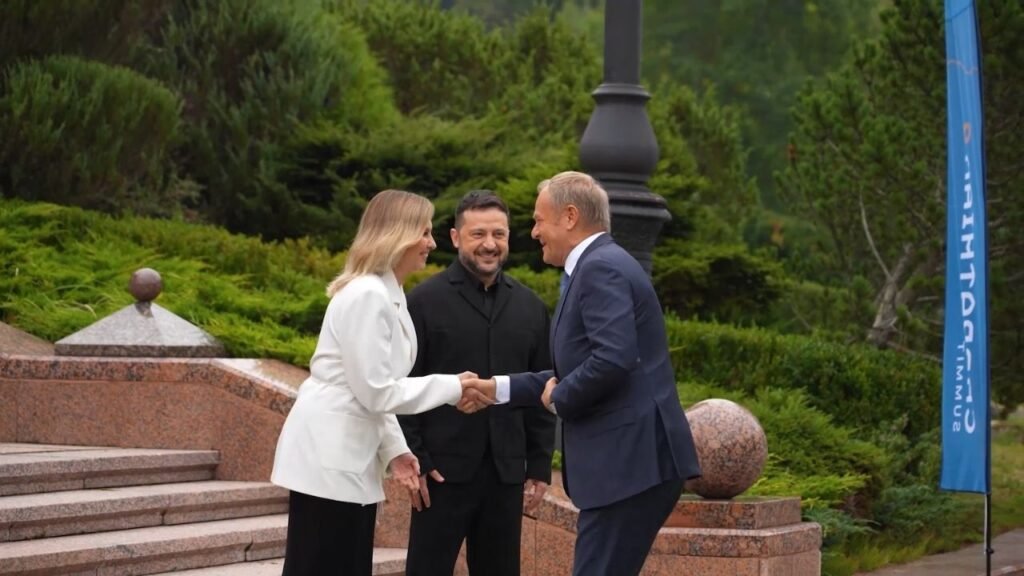
Romanian President Nicușor Dan, Serbian President Aleksandar Vučić, Polish Prime Minister Donald Tusk, First Vice President of the Czech Senate Jiří Drahoš, and President of Austria’s Federal Council Christine Schwarz-Fuchs arrived in Ukraine to participate in the inaugural summit.
Slovakia is represented by Interior Minister Matúš Šutaj Eštok. Prime Minister Robert Fico, who had previously planned to travel to Ukraine, canceled his visit due to illness. Hungarian representatives are expected to join the events later, according to Zelensky.
The C8 is intended to develop not as a one-off summit but as a permanent format for regional cooperation. Its main areas of focus include developing transport corridors and border infrastructure, energy projects, expanding trade and investment, cooperation between local communities, and strengthening security.
Transport mobility is another key area. Zelensky stressed the need to expand the capacity for movement between the participating countries not only for goods but also for defense-related cargo.
One of the initiative’s long-term objectives is to promote a separate EU macro-regional strategy for the Carpathians. Similar EU strategies already exist for the Baltic Sea, Danube, Adriatic-Ionian, and Alpine regions.
The economic part of the summit also includes the presentation of dozens of investment projects. Organizers have announced 90 projects requiring a total of approximately $10.7 billion in financing. Energy accounts for the largest share, with 33 projects worth around $7.28 billion. Transport and logistics, industrial, infrastructure, agricultural, and healthcare projects are also being presented.
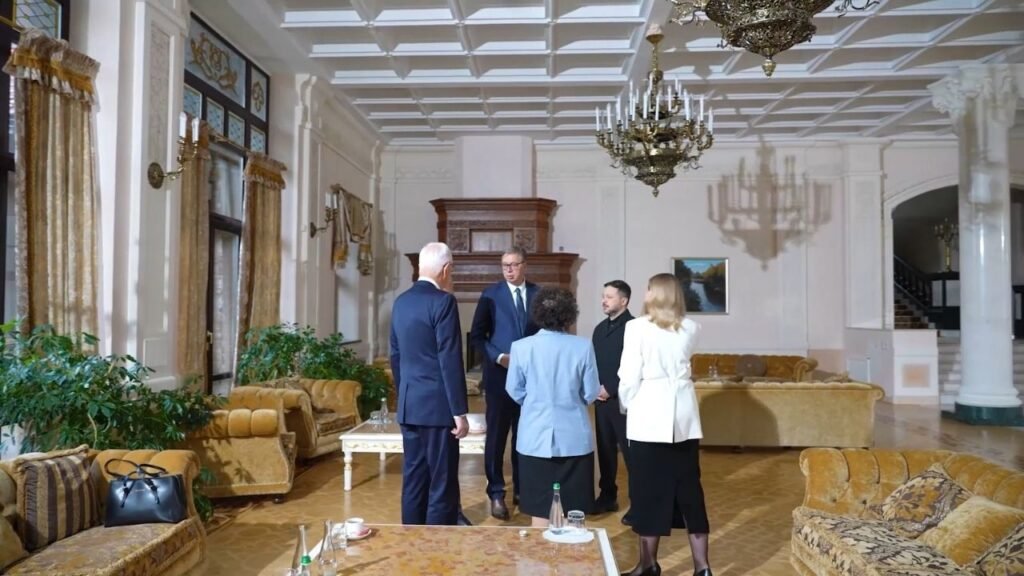
Romanian President Nicușor Dan stressed that the new initiative should deliver practical results rather than duplicate existing regional structures. Bucharest has identified expanding trade and investment and developing projects that directly benefit local communities among its priorities.
Dan also said Romania is ready to share its experience of European integration with Ukraine — from reforms undertaken before joining the EU to changes implemented after becoming a member state.