
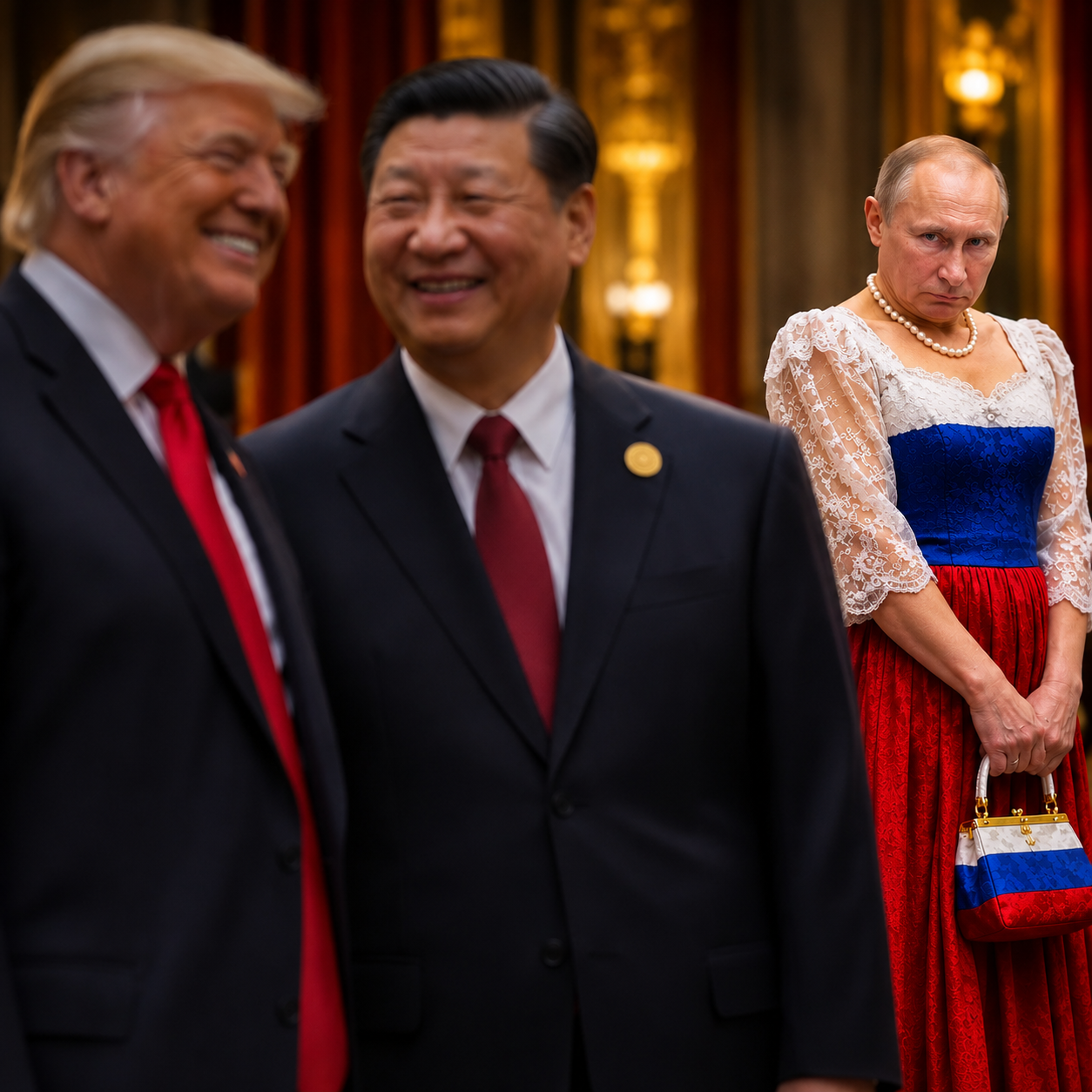
Vladimir Putin traveled to China with high expectations. For the Kremlin, the summit in Shenzhen was supposed to showcase Russia’s international influence, its special relationship with Beijing, and Moscow’s return to the club of nations shaping the future of the world.
Russian pro-Kremlin media even dubbed the upcoming meeting “Yalta 2.0,” drawing parallels with the 1945 conference that shaped the postwar world order.
However, instead of demonstrating Russia’s greatness, Putin received a series of diplomatic signals that called into question his claims to an equal partnership with the United States and China.
Ukraine dealt Putin his first humiliation
Ahead of the summit, Ukraine struck the Crimean Bridge — one of the main symbols of Putin’s Russia, which the Kremlin had used for years as an embodiment of its power and the supposed irreversibility of its occupation of the Ukrainian peninsula.
While Russian propaganda was preparing to showcase the country’s greatness to the world, Ukraine exposed the vulnerability of one of Putin’s most ambitious infrastructure projects.
The Russian president departed for China in the aftermath of an attack on a structure that held particular significance for his political image.
However, further uncomfortable moments for the Kremlin awaited him in China itself.
Xi Jinping highlighted the difference between Trump and Putin
One of the first telling moments came when the foreign leaders arrived in China.
Xi Jinping personally greeted Donald Trump at the foot of his aircraft stairs, while another Chinese official was assigned to welcome Vladimir Putin.
In international diplomacy, gestures of protocol often carry as much significance as public statements.
Despite years of assurances from Moscow and Beijing about the special nature of their bilateral relationship, the Chinese leader demonstrated different levels of attention toward the American and Russian presidents.
For the Kremlin, which has spent years trying to convince the world that a new international order is emerging with Russia as a key participant, this distinction was particularly revealing.
In the role of Xi Jinping’s ‘second wife’
The official group photograph was no less symbolic.
Donald Trump stood directly beside Xi Jinping, while Vladimir Putin was positioned next to the Chinese president’s wife, Peng Liyuan.
The composition of the photograph took on an almost comical appearance. Rather than presenting three world leaders on an equal footing, it visually cast Putin in the role of something resembling Xi Jinping’s “second wife.”
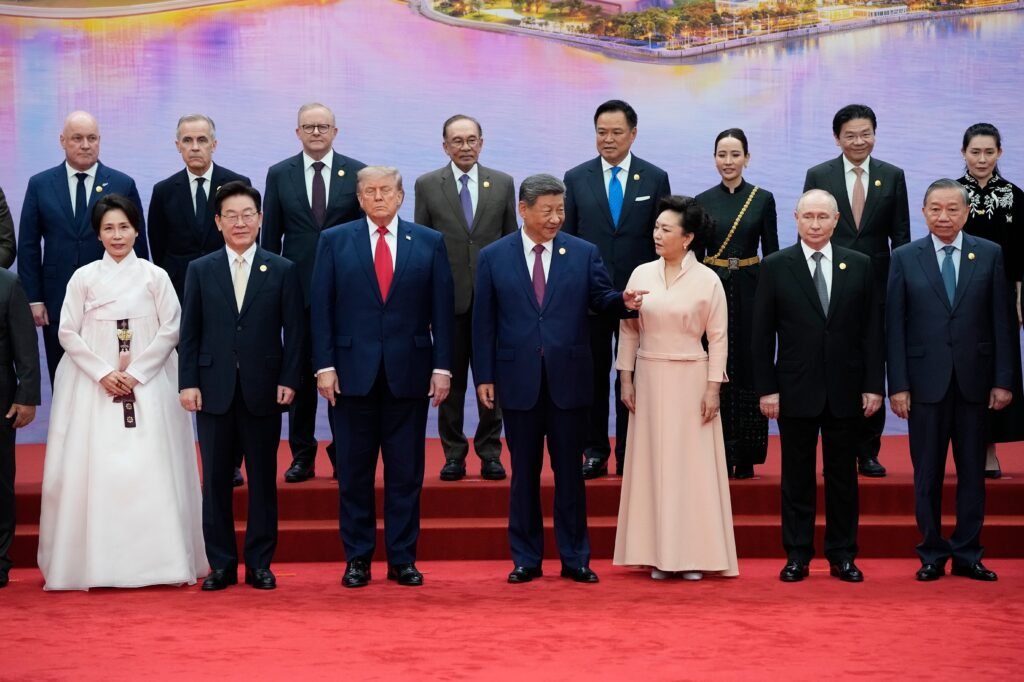
A similar diplomatic hierarchy was evident during the official dinner. Trump sat directly beside the Chinese president, while Putin was seated next to Xi’s wife, several seats away from Xi himself.
Of course, seating arrangements at official events do not determine the substance of interstate relations. However, taken together, these episodes painted a picture far removed from the one the Kremlin wanted to present to the Russian public.
High expectations and telling silence after the summit
Russian pro-Kremlin media portrayed the meeting in China as a potential “Yalta 2.0.”
Moscow hoped to demonstrate that Russia, the United States and China could shape the future of the international order.
Support the authors
of Ukraine Brief
→
However, the meeting concluded with the adoption of a four-point declaration. There was no breakthrough toward ending Russia’s war against Ukraine, and no major political agreements were announced that the Kremlin could portray as a historic victory.
High expectations gave way to relative silence.
One of the few foreign leaders to openly express enthusiasm about the summit’s outcome was Kazakh President Kassym-Jomart Tokayev.
During a meeting with Putin, he congratulated the Russian president on the results of his trip to China.
“I watched and rejoiced for Russia,” Tokayev said.
According to Tokayev, Russia had supposedly emerged at the forefront as a great power amid geopolitical instability.
Yet even Tokayev, commenting on the final declaration, acknowledged that expecting more under the current international circumstances would have been unrealistic.
In effect, even one of the summit’s most enthusiastic supporters acknowledged the limited scope of the agreements reached.
China set limits on Putin’s nuclear blackmail
Another significant outcome of the meeting was the reaffirmation by the leaders of the three countries of the principle that nuclear war is unacceptable.
For Putin, who has repeatedly used nuclear rhetoric as an instrument of political pressure throughout Russia’s full-scale invasion of Ukraine, this was an important signal.
China is interested in maintaining its relationship with Russia, but not in allowing Russia’s war against Ukraine to escalate into a global nuclear confrontation.
Beijing effectively outlined the boundaries Moscow should not cross.
This does not mean that a legal mechanism has been established to prevent Russia from using nuclear weapons. However, China’s political position demonstrates that even one of the Kremlin’s closest partners is unwilling to support Moscow under all circumstances.
Trump encouraged Putin, then undermined his own words
Perhaps the most gratifying moment of the summit for the Russian president came when Donald Trump publicly referred to Putin as his friend.
For the Kremlin, those words provided an opportunity to showcase the supposedly special relationship between the Russian and American presidents.
However, after the summit, Trump explained that his friendly rhetoric toward Putin was driven by his desire to secure a peace agreement.
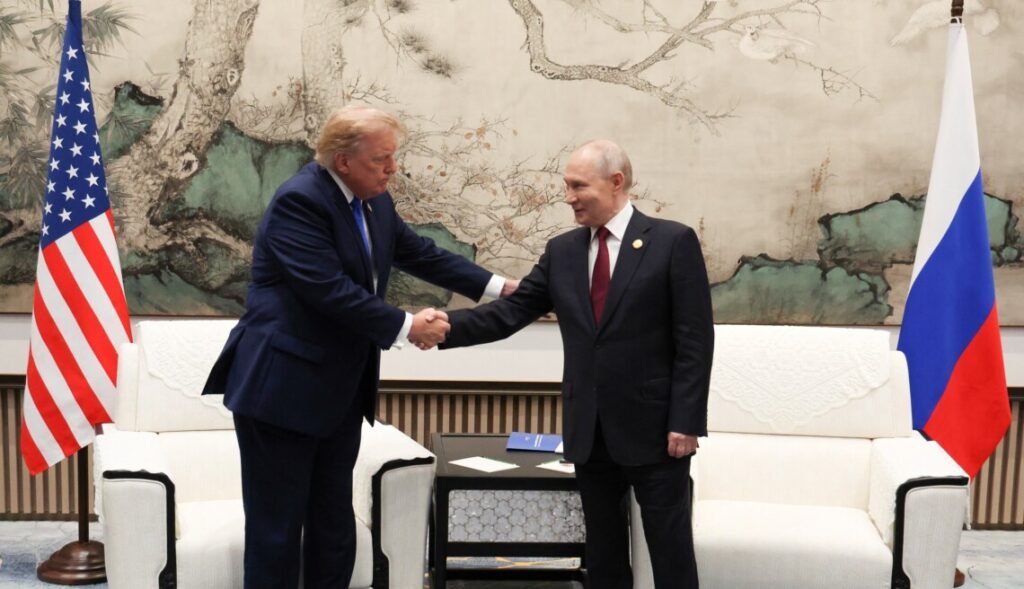
Speaking to reporters at Mar-a-Lago on November 26, the US president emphasized that his primary objective was to end the war and reach an agreement.
According to Trump, openly expressing hostility toward Putin would not help the negotiation process.
The American president did not deny that he considered Putin a friend, but effectively explained his remarks as a matter of diplomatic expediency.
Putin returned without a breakthrough. Ukraine may pay the price
The summit in China did not become the historic event Putin had hoped would cement Russia’s status as a power on an equal footing with the United States and China.
Undoubtedly, participation in a meeting of such prominence was itself something of a public relations victory for the Kremlin. Putin secured photographs, handshakes and an opportunity to demonstrate that Russia was not completely isolated internationally.
Yet these symbolic gains were not accompanied by a major diplomatic breakthrough.
China demonstrated its own hierarchy of priorities, Trump explained his friendly rhetoric as a negotiating tactic, and the “Yalta 2.0” anticipated by Russian propaganda never materialized.
For Ukraine, however, the Kremlin’s diplomatic setbacks do not mean a reduction in danger.
There is a risk that Moscow will attempt to compensate for the lack of convincing foreign policy achievements by intensifying military pressure, including attacks on Ukrainian cities, energy facilities and civilian infrastructure.
While Putin is forced to reckon with the interests of stronger powers on the international stage, the Kremlin continues to use destruction and terror in Ukraine as instruments for projecting strength.
And it is Ukrainian civilians who may become hostages to yet another attempt by Moscow to prove its might.
Rather than marking Russia’s triumphant return to the club of nations that determine the fate of the world, the summit in China exposed the limitations of its geopolitical influence.
Putin wanted a seat at the table where the future of the world would be decided. Yet even at that table, his place was assigned by others.



Leave a comment