
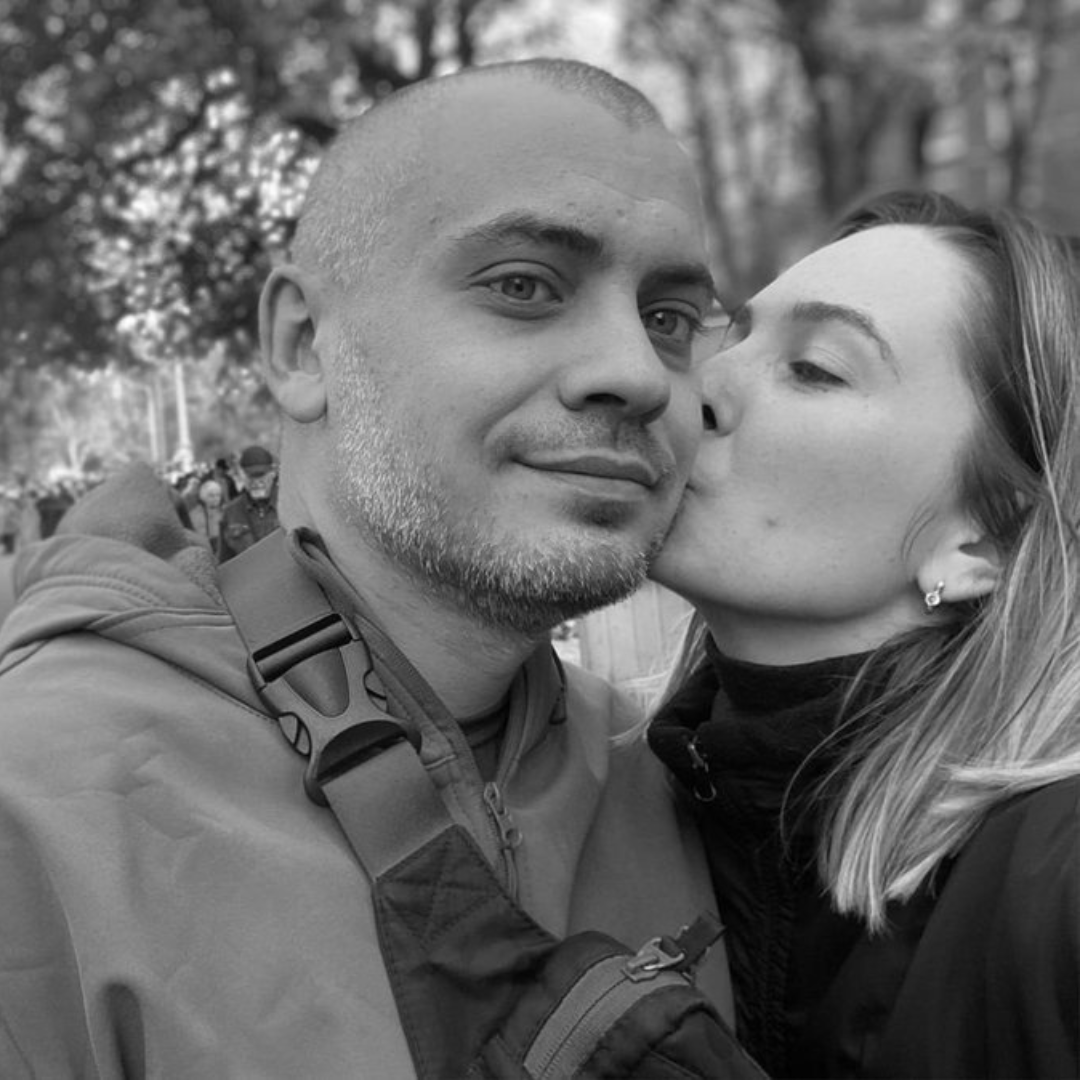
At 24, Yulia Kostenko became a widow. Her husband, combat medic Oleksandr, was killed in the Kherson region while rescuing wounded fellow soldiers. Their marriage lasted just 100 days. Later, the war took Yulia’s brother and a close friend, while a fire claimed the life of her mother-in-law, who had become a second mother to her after her son’s death.
Despite these tragedies, Yulia refused to give up her dream of serving in the military. She repeatedly applied to enlist and was turned away, but eventually succeeded. Today, she operates interceptor drones that hunt Russian aerial targets.
The servicewoman shared her story of love, loss and her decision to defend Ukraine with Suspilne Odesa.
A GRENADE RING AND JUST 100 DAYS OF HAPPINESS
February 24, 2022, changed Yulia Kostenko’s life forever. On the first day of Russia’s full-scale invasion, her partner Oleksandr, her brother and other relatives decided to join the defense of Ukraine.
Yulia also wanted to enlist, but her loved ones strongly opposed the idea.
“Everyone packed their things and left on the very first day. And when I said I wanted to go too, they told me, ‘No, only over my dead body,’” she recalls.
Instead, Yulia and her family began volunteering, supplying Ukrainian troops and helping civilians.
Oleksandr joined Ukraine’s 126th Separate Territorial Defense Brigade and fought in the Kherson region. Yulia’s brother served in the National Guard’s 15th Operational Brigade, known as Kara-Dag, on the Zaporizhzhia front.
When Oleksandr was sent back to the Kherson region, Yulia decided to go with him. She gave him an ultimatum: either they stayed together or they would separate.
He agreed.
Soon afterward, in Mykolaiv, Oleksandr proposed to Yulia. Instead of a traditional engagement ring, he slipped the safety ring from a grenade onto her finger. A few days later, they officially became husband and wife.
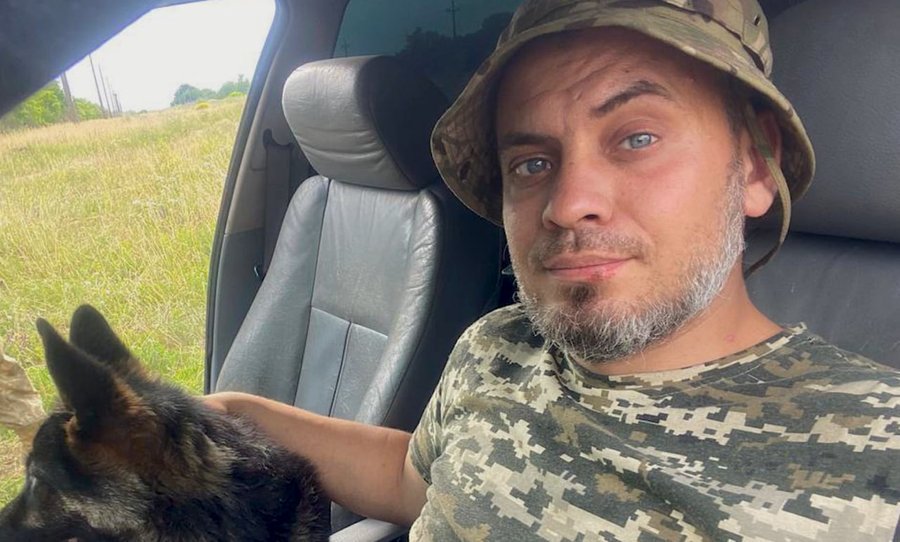
It seemed they had their whole lives ahead of them. But the war gave them only 100 days.
“We were married for exactly 100 days. On the 100th day, he was killed,” Yulia recalls.
“WHERE IS HIS WEDDING RING?”: THE DAY HER WORLD FELL APART
In the Kherson region, Oleksandr served as a combat medic. Yulia helped him, and their daily lives unfolded alongside soldiers for whom danger had become routine.
One day, Oleksandr sent his wife to buy groceries.
Support the authors
of Ukraine Brief
→
Shortly before that, the ambulance used by his unit had broken down and was undergoing repairs. When soldiers were wounded during a Russian attack, Oleksandr drove his own car to rescue them.
He managed to provide medical assistance to those who needed it. But he was killed on his way back.
When Yulia returned, she saw the badly damaged vehicle. At first, no one even told her that her husband was dead.
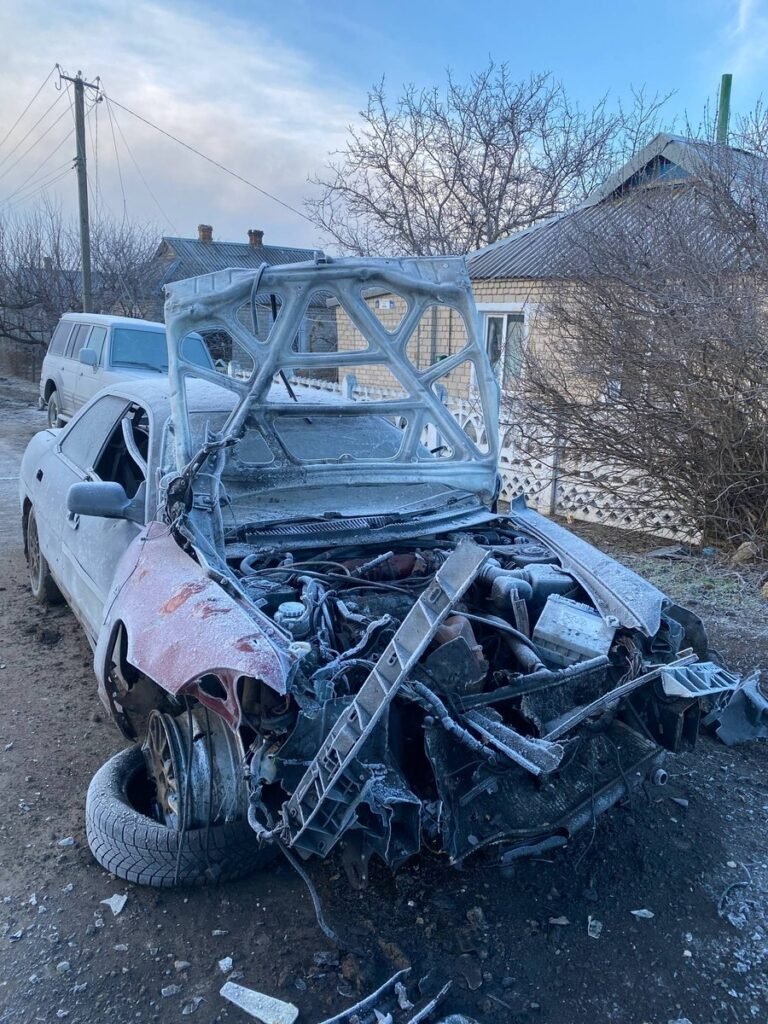
Among the wreckage, she began searching for one thing: his wedding ring, which Oleksandr wore around his neck.
“I ran there and started screaming, ‘Where is his wedding ring?’ They kept telling me, ‘There is no ring, Yulia.’ But I just kept walking around looking for it. At 24, I became a widow.”
After Oleksandr’s death, Yulia took responsibility for caring for his mother, who had a disability. She understood that while she had lost her husband, her mother-in-law had lost her only son.
“His mother was left in my care. Somehow, I had to help her get back on her feet and pull myself together. I understood that it was harder for her because he was her son. It was hard for me because he was my husband. He was the only person she had.”
It was then that Yulia once again considered joining the military. But her mother-in-law and brother begged her to stay home.
She agreed to wait. Soon, however, the war dealt her another devastating blow.
“SIS, I DON’T WANT TO DIE”
Five months after Oleksandr’s death, Yulia’s brother was seriously wounded during an assault on the Zaporizhzhia front.
He had participated in numerous combat operations and always warned his sister before leaving on another mission.
Usually, Yulia reassured him that everything would be fine. But one conversation remained etched in her memory forever.

“So many times he went on assaults and told me, ‘Sis, I’m going on an assault.’ I would tell him everything would be fine. But this time he said, ‘I don’t want to die.’ That was the day he was wounded.”
That evening, Yulia was informed that her brother had been injured. The following day, she traveled to Zaporizhzhia.
According to her, a piece of shrapnel had struck him in the head. Doctors fought to save his life, but he did not survive.
Yulia’s brother died on July 29, 2023. He was buried on August 3.
But her losses did not end there.
Just two weeks after her brother’s funeral, Yulia learned that a close friend had been killed. During the memorial gathering, her sister called to tell her that their grandfather was dying.
One tragedy followed another.
“Every one of these people told me, ‘You’ll only join the military over my dead body.’ And I told every one of them that I wanted to go. It was my dream,” Yulia recalls.
Despite everything, she continued caring for her late husband’s mother. The two women had grown so close that they called each other mother and daughter.
But on March 7, 2024, another tragedy struck: Yulia’s mother-in-law died in a fire in her own apartment.
REJECTED AGAIN AND AGAIN, BUT SHE REFUSED TO GIVE UP
After losing so many loved ones, Yulia needed a long time to recover emotionally.
Eventually, she began assisting the recruitment service of one of the brigades in which her husband had previously served.
But volunteering and administrative work were not enough for her. She wanted to become a soldier herself.
Every time she came to work, she submitted another application to enlist.
“Every time I came to work, I wrote an application: ‘I want to serve.’ Every time I filled out the form, and every time they turned me away: ‘No, you’re not going.’”
But Yulia kept trying.
Eventually, she was accepted into the military and offered a choice between working against ground targets or aerial threats.
Without hesitation, she chose the sky.
NOW HER TARGETS ARE RUSSIAN SHAHED DRONES
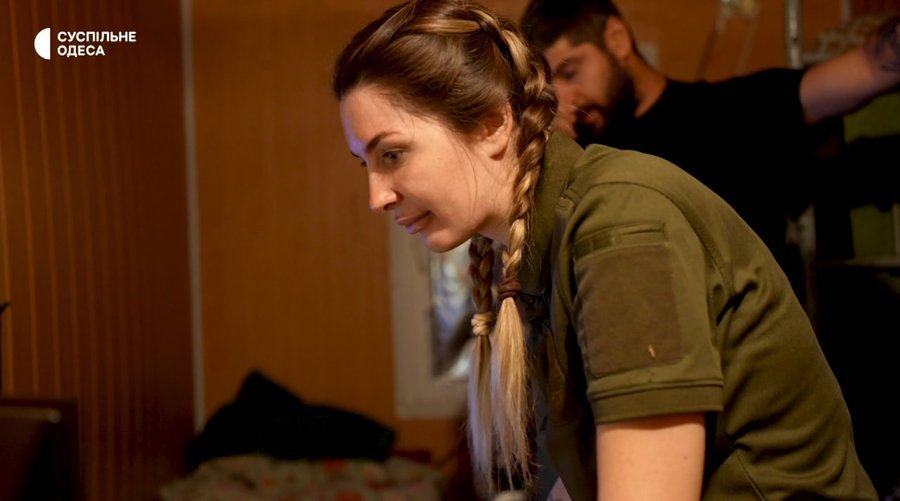
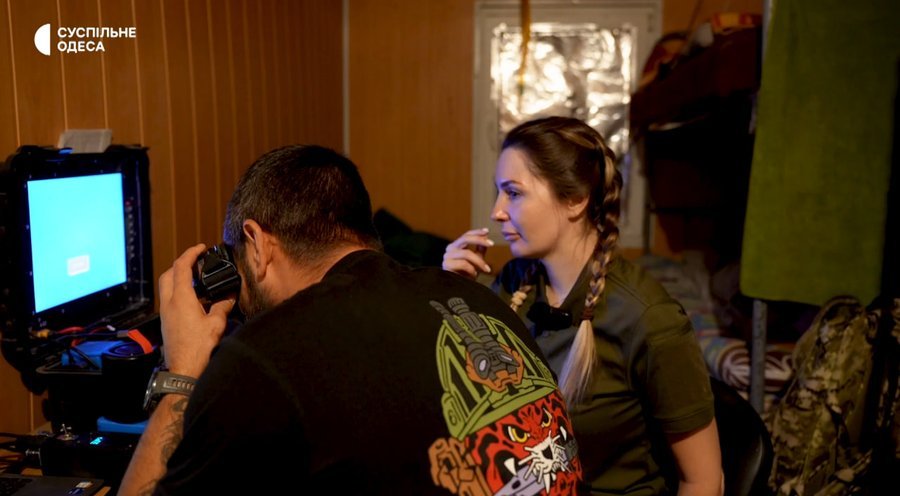
Today, Yulia Kostenko is an interceptor drone pilot. She operates systems designed to destroy Russian drones and other aerial targets.
Her job is different from what most people imagine when they think of drone operations.
The servicewoman can remain in one location while intercepting enemy targets in an entirely different region, using remote-control technology.
“I work remotely. I have three locations where I shoot down Shaheds and other aerial targets. I sit in one place, but I can shoot them down in another region.”
According to Yulia, the most important skills in her work are detecting threats in time and making split-second decisions.
“I think good eyesight and quick reactions are essential for a pilot. Detecting a target is very difficult. But once you see it, that’s it.”
One of the targets she remembers most vividly was a Russian SuperCam reconnaissance drone.
She recalls spotting it at high altitude and beginning to pursue it.
“It’s a reconnaissance drone that we suddenly encountered at a very high altitude. I spotted it and chased it. Shooting down a SuperCam was something I had dreamed of.”
The servicewoman explains that the intensity of her shifts depends on the scale and type of Russian attacks. Some days are relatively quiet, while on others she must respond to multiple types of aerial threats.
“Easy days are when there are no targets at all. Hard days are when everything is flying at you: ballistic missiles, jet-powered and regular Shaheds, and guided aerial bombs.”
For Yulia, defending the region where her family lives carries particular significance.
“I also work in the region where my family lives, and it’s important to me that they are safe.”
After everything she has lost, this is no longer simply a military mission. It is deeply personal.
NEW COMRADES AND DREAMS OF A PEACEFUL LIFE
In her unit, Yulia serves alongside people she knows well. Her navigator is her close family friend and best friend. Another close family friend also serves in the battalion.
She describes a strong sense of mutual support among the soldiers and commanders who listen to their personnel.
“Everyone here is very close, and there is strong mutual support. The commanders always understand you and listen to you. Basically, everything is just as I wanted.”
According to Yulia, she does not experience different treatment because she is a woman.
“In this respect, you are all soldiers. You have a common mission, so focus on it.”
But beyond military service, Yulia still has ordinary, deeply human dreams.
She hopes to see her sister and nephew, who live abroad. She also dreams of attending a concert by the Australian electronic music group RÜFÜS DU SOL.
After everything she has endured, these dreams may seem simple. Yet they are a reminder that behind the military uniform, combat missions and daily fight against Russian drones is a young woman who once dreamed of a happy family life.
The war took her husband just 100 days after their wedding, her brother and other loved ones. But it could not take away her determination to live, protect others and build a future of her own.
Today, Yulia is doing everything she can to ensure that other Ukrainian families do not have to endure the pain she has experienced.
This article is based on Yulia Kostenko’s story originally published by Suspilne Odesa. Her quotations have been translated from the original Ukrainian.

Leave a comment